Plan Pool Shape
In the article ‘filtering types’ I wrote the next types:
- Biofilm-accumulating Substrate Filter beds (BSF);
oxidizes dissolved phosphorus
- Technical Wetland (TWL);
- Hydro Botanical Systems (HBS).
The ranking above is the logical sequence for my water flow plan.
Every item has the following content.
- what cause the pollution of the (rain) water
- what is role of each filtering type;
- what are the conditions of these types;
- what is the design of the filtering types.
What cause pollution of the (rain) water
The first thing you have to be aware of is with collecting water that it can be polluted. I give a list of the possibilities.
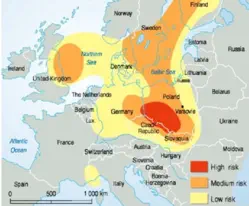
Rain: acid rain gives a pH of 4 - 5 average and is mainly created by the emission
of factories through SO
2
and NOx. Mostly in the middle of Europe
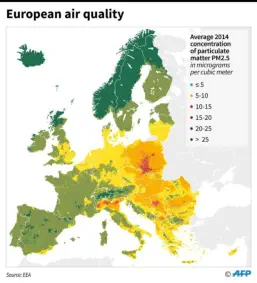
Air: air pollution, comes from industries and cars. It gives a risk factor of your
health. It is on the agenda of climate change. It influence the rain water, but it
can be filtered by flora.
Gutter: when the water is coming on the roof, it can be polluted by leaves and branches caused by wind , insects or
bird droppings. You can reduce this pollution by cleaning the gutters regularly and place filters in front of the rain
pipes to prevent the worst.
Maintenance: Periodically clean the roof, gutters, rain pipes and the different water pipes to protect it from moisture.
Remove dead plankton.
Role filtering type
Troublemakers
When you collect rain water the first time in a basin it is clear, but within a week it turns a murky green caused by
floating green algae because there is good nutrient and no enemies. After some weeks there is the emergence of
enemies like water fleas causes a decline of the plankton algal population. Further in time there can be a switch of
the balance by a reduce of enemies or disturbing by placing new plants or change in climate autumn to winter. there
will always be planktonic algae, even in clear water. Dead plankton should be removed.
The other trouble maker is biofilm, the growing of underwater microorganism. In time they can create a slimy mucus
film. dissolved nutrients, germs and pollutants provid nourishment for biofilm microorganisms. the speed of the
formation depends especially of dissolved oxygen and nutrients. Running water improves the nutrition significantly..
Biofilm has four phases:
- conditioning: in a few minutes gauzy organic deposits, a bed for the first microorganisms
- growth: produce of mucus film and get thicker by the time
- equilibrium: lower layers become anaerobic
- final phase: parts of biofilm die off
First step solutions
Reducing floating algae you can reach ti by reducing nutrients. Also more shade instead of in full sun.
Oxygen is essential for respiration of all organism. For nitrification and sedimentation of phosphorus which is
important to keep the pool clear. The hight of oxygen depends on pressure and temperature.
You have to create a pH between 6 and 8,3. In chemical terms it means a balance between HCO
3
- and Co3
2-..
BSF & TWL:
In principle BSF and TWL are most effective in reducing pathogenic germs but their phosphorus fixation is lower than
in HBS.
HBS:
HBS provide effective phosphorus fixation but a lower reduction of microbes
Conditions of diverse filtering types
BSF
The condition of BSF
TWL
The condition of TWL
HBS
The condition of HBS